Wednesday, April 27, 2016

4/27 THE GRAND FINALE?!!????????!?!?!


ITS' NOT SO GRAND IS IT WHEN YOU HAVE 2 MINUTES TO EXPLAIN 5 MONTHS OF RESEARCH IS IT?!?!?!


HOWEVER. I think this is legit-ish I dunno. It's very difficult to put all of the work into a "final phase" per say because I think this very blog kind of IS the final phase already? That sounds weird let's go into detail.


So my project was totes about humor and identity and the Internet and how having an online presence is a super easy catalyst when it comes to being humorous. My "thesis" per say was that the power of technology allows for an increased power of expression... Increasing the things people find funny and the capacity for people to BE funny.


This blog proves that that statement is true. It is my blog. It is not like any other blog because it is mine. yes.  Individualism is funny. But while I've been preaching that YES YES THIS IS GREAT! There is another side that must be considered indeed!


This is a very unromantic view of comedy. This is a very unromantic view of what humor is supposed to be. By unromantic I mean it in the Romanticism during the Renaissance way. Ya see the Romantics believed that EVERYTHING WAS CONNECTED. THAT BEETLE. THAT TATTOO ON YOUR WRIST. THE MOON. ALL CONNECTED IN ONE BEAUTIFUL UNIVERSE! This is so unamerican though. In American society at least, everything has its little box. Beetles have nothing to do with the moon.

Comedy however is one of the few things that have some semblance of romance in it. Not as much as the silent film era where the banana peel gag was universally funny... But it still has the same "let's all laugh at the same thing" stigma. There is still a universality to it. But my theory that anyone can be funny suggests that even this is changing.

Let's take a look back at the definition of comedy established by that TED guy from earlier in meh blog. Humor is about benign violations. But with individualism comes all sorts different emotions as to what is benign and what counts as a violation. I deduce that being a comedian is becoming more difficult because it is becoming more difficult to accommodate every individual.

Will humor become a more personalized endeavor? I dunno I'm not a psychic why would you even ask me that question? Because I've predicted things correctly before?!? Touche.

But yeah. My project is a thing and it exists. Go Frolic.


*Unit 3*

Wednesday, April 13, 2016

4/14 GrapHIC nOVELS DOEE

So Italian.

So I read Interiorae, a graphic novel by Gabriella Giandelli

It's a weird one. But I liked it.

Death is treated very weirdly in this thing.

It's basically about an imaginary rabbit who's job is to be an eavesdropping little turd towards everyone in the apartment complex. His boss is this wierd Satan blob thing that's in the basement of the apartment that likes to feed on people's dreams and collects their secrets as well... Yeah.

Yes, this is the Satan Blob
There are barely any rules in this book a bunch of weird stuff happens and like... Just read it you'll see.


THE CHARACTERS
The dopest part of all of this are how all of the people in the apartment are characterized cuz they're so insanely REAL. The contrast between real and surreal is very interesting and this book doesn't play around. They are directly linked and I don't knwo how I like feel about that lol.


COLORS
This book is incredibly dark for the whole thing and the pretty colors don't come until the end. It's like the characters that reside in the apartment are stuck in some kind of perpetual purgatory that is somehow resembling real life and nobody gets to face true ascention until the end of the book.

Or maybe it's not that deep and this graphic novel is just trying too hard to be artsy. In this case I actually think it's the former, and I'm pretty cynical... you be the judge.


I read the whole thing. It's a good book. Read it peeps.


*Unit 3*

Thursday, April 7, 2016

4/7 How 2 Documentary Review

Alright, so I couldn't stick around for the first half of Watch Kids Go ta School: The Movie... But I DID recently watch a documentary titled The Two Escobars. It's about Pablo Escobar, the drug guy who was really freakin good at being a drug guy; and Andres Escobar, a soccer guy, who was part of the Colombian National soccer team that went to the world cup. And the relationship between Pablo's drugs and Andres's lives. Cuz the drug money was being turned into soccer money and the players were hella good too. It was an ESPN documentary too so I was very impressed cuz I am not a sports man.

Anyways this was the review I read

http://www.avclub.com/review/the-two-escobars-46374

I was surprised when I was searching for and reading reviews for the documentary because they focused mainly on explaining what is happening and the climate of the documentary. Whenever I look at reviews for a fiction movie, sure they explain the plot but then they usually get super technical. Fictional movie reviews are like "Oh I didn't like how they did ______ because it took away from the believability" or whatever. These reviews were all commenting on the actual message of the documentary and evaluating how plausible the message was.

I'm tellin ya we're all still puritans. We're much less harsh on documentaries cuz they actually happened but if it's fictional things can still turn into a version of "CRAZY UNGODLY WITCHCRAFT".

So I guess the rules for a documentary review would be:

1. Have a thorough understanding of what is being documented so you can determine if the argument being made is valid regarding the situation

2. Determine if the argument is argued well. If the connections make sense. I'm Ira Glass STAY. WITH US.

3. And ya know what? Tie in the technicalities too. Was the documentary actually well made? Because that will definitely affect the other two points I made. Treat it as equally as fiction, because the making of it requires just as much artistry in my opinion.

*Unit 3*

Tuesday, March 29, 2016

Portfolio Time!?!?!? 3/29

OKAY. HERE WE GO. GRAND FINALE NUMBER 2 ISH.

So I actually read some of that poorly written Hokenson book and found that while I dislike the language, I enjoyed the points being made. Hokenson moves through history, explaining the role of humor as an agent in challenging and redefining the societies where it resides. While I much more appreciate humor as it relates to individual identity, I feel like the concept naturally must go hand-in-hand with humor as a piece of the social identity. Reading Hokenson, I more or less got the same idea from the many examples she provides in the text.

This is the idea that humor serves as a two sided fun house mirror of sorts in relation to society. On one hand, it is reflecting our values in our faces and setting the stage, on the other, it is distorting our values and constantly causing us to redefine what is and isn't "funny". I mean, and this is truly a constant cycle I'm talking about here. Jokes that may have been funny in the 1970's (a rather violent time in media history) might be seen as vulgar today.

Hokenson talks a bunch about comedy in the theatre as it related to social identity, so I tested out her theories by reading The Mandrake by Niccolo Machiavelli, an Italian Renaissance philosopher. It's five acts and I kind of felt like I was reading a Will Farrell movie. None of the characters were like, good people. There is a huge amount of deception and sleeping with your friend's wife. Fun. Also, nobody really gets punished for like being a douche. Usually in old comedies, the good people win and there's a marriage. Yeah there's a marriage, but like everyone's still a douche. It's a really raunchy play too.

Anyways, this play was written because the Italian higher ups in Florence basically Facebook Unfriended Machiavelli and he was like hella salty about it. He basically thought politicians and authority figures were a deceitful doodyheads who would do literally anything to maintain their power. Hence, now we have Machiavellianism, which is a pretty legit personality type in psychology. People who are Machiavellian have a natural knack for being deceptive, conniving little pricks. It just goes to show that mistrusting your government was never a new idea. I'mlookin at you millenials!!!! *incriminates a mirror*.

And this ties back to the TEDx Talk about the very structure of humor, doesn't it? Humor is about benign violations, and the way Hokenson describes how humor and its theories have evolved through different time frames feels very familiar. Because humor is a benign violation, if a bunch of people consistently find the same things funny, they will feel less and less violated by the same things as time goes on. It's a psychology thing. As different things happen in society, different kinds of humor become more or less funny. This shifts a lot.

BUT THE INTERVIEWS I CONDUCTED WITH PEOPLE AND THE ARTICLES I READ IN UNIT ONE TELL A DIFFERENT STORY!!!!!!!!!!!!!!!!!!!!!!!!!!!!!!!!!!!!!!!!!!!!!!!!!!!!!!!!!!!!!

Or at least change the way the story is told! Yes, humor is universal because there is always something to laugh at. But, in Modern America at least, the Internet is changing the game. Now, collaborating to find something funny is more of a choice because now all the rhetorical power and all the information in the world is literally at our fingertips. The Internet encourages individualism in us. Which is both a blessing and a curse. Yes, face to face interaction is still cooler in my opinion, but it automatically makes one less of an individual because there is an inherent desire to be agreeable in public. It's manners and what not. The Internet is also pretty much a public space, but most people don't use it that way. More accurately, the Internet represents an infinite number of private spaces that people can plug into at their leisure. By spending our free time surfing on the web and whatnot, we're individualizing our own sense of right and wrong, good and bad, and our own sense of humor. Everybody is taking in the constant flow of information (and misinformation) and formulating their own perspectives.

This explains why the people I interviewed were the same age in the same place, but had utterly different senses of humor. The social identity IS the individual identity. Whoa.


REFLECTION TIME!!!


The annoyingly wordy book helped provide a nice framework for unit 2. It helped in like connecting so many dots. I mean I spent most of my project time trying to friggin make it through the thing, looking up phrases and stuff. 

The project pretty much became getting through that book because I knew a smart person who does smart things wrote it so the more I hopelessly stared at the pages the more I would find out. 

Frankly, I'm glad I did that because now everything seems so like solidified and goes beyond like article analysis. I wish there were more academic articles about like humor in a sociological frame that lays out a wide blanket on the topic. I found stuff but it was usually way too specific.

As for the new sources I used, that was pretty much the main thing. But it was a difficult source and it was pretty much holy grail tier because it fit so dang well into my argument and looks so pretty next to my other sources. It was packed with capital I Information too.

I still would have preferred Hokenson use smaller words and wrote a bigger book. I'm still mad about that.

Moving forward, I guess the next question would be specific to American Humor. How did "funny" get to become individualized like it is for my generation? Was it just the Internet or SOMETHING MOOOORE?!!???!?!??????!?!????????!??!?!??


*Unit 2* 

Wednesday, March 9, 2016

3/10 Humor burger helper?!?!?

Alright so I watched another TEDx event about humor. I mean there are a lot of TEDx videos about comedy so yeah expect a bunch of those with some articles and stuff too for my project.

Anyways. This is a TEDxDhaka event in which Naveed Mahbub talks about how through humor people have come to understand him better. One particular instance he describes happens after he finishes a set talking about his difficulties about the airport. After, an intimidating southerner pulled him aside and said that from the humor he understood more about muslims than he ever learned, even when he was in the Middle East.

https://www.youtube.com/watch?v=aeO701Zyjnk

That's the link dudes.


Anyways! This is interesting when it comes to humor because it demonstrates the value that face-to-face comedy can provide. The genre of stand-up comedy is unique in that the literal identity of the speaker is what sells the humor. I wonder how this translates to internet humor if it does at all. Is it as if everyone becomes their own stand up comedian through the social platoforms they use; or is there something different at play? Can we achieve the same level of understanding that Naveed experienced that day?

I doubt it. But it's something to look into fo sho.

*Unit 2*

Tuesday, March 8, 2016

3/8 Jan Walsh Hokenson writes too many big words.

So I rented The Idea of Comedy  out from the library and I tried to read it and it was an unsettling experience. I'm very much used to reading things in plain english, and I feel like this lady had a word count limit and used the most exuberant and extravagant words to be within the limit.

Like the book is basically in latin. I have to read very slowly just to follow what she's saying and that fact is getting on my nerves. I'm lucky enough to actually know some of the references she makes so at least there's that.

In the book Hokenson basically puts on her analyzing glasses and analyzes/explains the different theories of comedy and the sociological worlds surrounding them throughout history. 

That sounds very interesting, how can you POSSIBLY make it boring? By USING TOO MANY TEN SYLLABLE WORDS IN CONSTANT SUCCESSION. OK. I GET IT. YOU HAVE A LOT OF PEER REVIEWED PUBLISHED WORK. GOOD JOB SMARTY PANTS. (No but it's actually really hard to do that props gurl.) 

I dunno I just don't think knowledge that can't be understood by even an undergrad is knowledge that shouldn't be published. We're expected to refer to books like this one in our super duper mega essays or whatever so please, stop with the latin. It's a DEAD language. Holy crap.

It's not that I don't understand the words. I just want to be able to like read and learn what's in it at a faster pace. But the way in which it is written literally prevents me from being able to just read a sentence and be like "yea I understood that".


This book is a stressor.

Wednesday, March 2, 2016

3/3 OK SO I PITCHED IT I THINK??

I basically sent a link to this blog to one of the writers on Clickhole.com

Clickhole seems pretty relevant to my topic because it capitalizes on internet humor and earlier on I touched on the idea that the internet's reformulation of our perception of humor is allowing individuals to gain their own unique sense of humor because the internet is so darn HUGE.

Longest sentence ever wow.

Anyways the email pitch looks like dis:


Hello, Adam...

Meh name is Rafiq and I go to ze college and for my writing class I had to make ze blog and "pitch" it to a person with more money than me I. E. YOU.


I know what you're thinking actually I don't but frankly dear, I don't give a *hoot*. 

My project for this blog thingy is about humor as it relates to identity and millenials and all that stuff. I try to sound intelligent but I'll let you be the judge as to whether I actually DO or not. 


Click that hole, man. 


I figured, why not turn my pitch into a horrible attempt at humor? The dude's a writer for Clickhole I mean cmooooon!

*Unit 2*

Tuesday, March 1, 2016

3/1 Ok so I'm still hooked on this humor and identity thing...

Alright I wanna keep researching humor as it relates to personal identity because it is STILL incredibly fascinating to me. I'm glad this assignment happened, because it provided me with an oppotunity to actually get some testimonials from people I know in real life.

I asked all of these questions either in person or by phone call because texting them just seemed like an awkward idea. What if they don't respond? Not risking that complication no sir! So here are the questions and respective responses.


What is the funniest thing that has ever happened to you?

Person 1: A hobo once spent 30 minutes trying to convince me that if I slept with pantyhose under my pillow I would turn into Ganesha, the Hindu Elephant God of Wisdom.

Person 2: I once fell down an escalator into an elevator as it was closing, sending me back the the top floor of the mall that I literally just descended from.

Person 3: When I was like, nine ot ten, I was at a water park and I got lost. So I climbed up to the top of the biggest waterslide in the park to yell for my parents. But I didn't need to in the end because my older brother, who we all thought was studying abroad, was working on that ride at the amusement park. So he helped me find my parents but trying not to be spotted by them at the same time. It was hilarous. He did get spotted and he got into huge trouble. But the whole ordeal is like funny in hindsight now.


What is your weirdest habit?

Person 1: I sleep with pantyhose under my pillow. No, No, I joking. Um, I don't know? I listen to NPR?  

Person 2: Sometimes, when nobody is around, I like to switch the locations of the pens and pencils in the room and see if people notice.

Person 3: Sometimes I like to put Oreo filling on a toothbrush and eat it that way. I'm surprised I haven't lost all of my teeth yet. 


How much work do you put into your selfies, if you take them? 

Person 1: I don't do selfies.

Person 2: Sometimes it takes hours. I have a problem. Is the angle right? Is there too much contrast? Are the shadows okay? Do I need to reshoot? I'm stressing out just thinking about it.

Person 3: I take pictures of food usually, but when I do take selfies, all I do is add the filter I like, nothing much else.


I was really satisfied with the responses I got. I think I asked good questions. My aim was to provoke specific answers but still keep the questions open enough to allow for different types of answers. "What's the funniest thing that has ever happened to you?" seems to achieve this best. I always asked the questions in the same order as well. Moving from something that happened to the person, to something the person does, to a more specific action that is as identity as identity can get: taking a picture of one's face. I did this to see if I could find a throughline between humorous experience and indentity on an individual basis. Later on, I might do this same exercise with even more people. It was fun!

It was also very interesting to recieve the answers because I indirectly got to see how different people define the words "humor" and "weird".

*Unit 2*

Thursday, February 18, 2016

2/18 This is the part where I look deep inside myself.

Okay. So I'm pretty good at creative writing. I'm not going to lie. But am I good at research writing? I probably could be if I felt like it.

Ow. That sounds really bad... So what, I'll leave it.

Anyways, let's go through the sources I chose and see if they're really okay or not. The 2008 article may be from 2008, but that doesn't mean it's like, bad. In fact, I see it's datedness as a helpful glimpse into a time when the internet was young and the relationship between comedy and identity was only beginning to really sprout. It gets really in depth about not only the celebrity response to the writer's strike, but internet humor as a whole. I didn't really focus on its statements about internet humor as a whole in my critical review. That's kind of a big miss. Whoops.

The TEDx video serves as an interesting addition because it provides a distinct definition of how humor is created, while still stating that humor works on a individual basis as a verbal asterick. This was a great source to use in my opinion because it provides a nice starting point for my analyses of humor as it relates to identity.

The third source I used, the Wall Street Journal essay, was a little different in its message. It was much more opinionated and actually made an argument as opposed to explaining a phemonmena. I thought it would be a good idea to include this source because it makes inferences based on literal science about the effect humor has on people. In the video I talk about how it relates to me specifically but I forgot to mention how internet humor is increasingly becoming a part of social identity, possibly even out of dare I say: necessity!!

If you couldn't tell earlier, I don't like boring writing, so I was very happy with the feedback that my neighbors wanted to keep reading. They also stated that my strength is in the way I argue my points. However, because this is "research writing" I was told that my summaries of my sources were dispropportionatly weaker than my critical responses to them. I don't want people to be confused about what I'm even responding to, so I have to make sure to be more thorough with my summaries so as to not jump the gun.

*Unit 1*

Wednesday, February 17, 2016

2/18 Comedy and Health and Easy Mac Oh MY!!


http://www.wsj.com/articles/SB10001424052702304256404579449180386537694 If you wanna see the article.

*Unit 1*

Tuesday, February 9, 2016

2/9 THE TIMES OF 2008!!!?!?

So I read this NY Times article titled "Sidelined by Strike, Comedy goes Online" by Dave Itzkoff.

This article is from freaking 2008. Why so old? Well there was a major Writers’ Guild strike so television was really sucking. Then all of a sudden, these actors and entertainers are making their own web content and posting their work online. The article records this phenomenon and provides examples as well.

I can barely remember the internet in 2008. However, I remember what is wasn’t. “Youtubers” definitely didn’t have the same societal standing they do now, if they existed at all. That’s why this article is interesting in its relation to the internet, humor, and identity.

When the celebrities took to the web to express themselves during the strike, producing content while TV production was suspended, they demonstrated that the internet could be used as a tool for the branding of the self. Having three friends who have created their own comedy web series, it is interesting to me how simple comedy has become to pull off on the internet. The content is exposed to such a wide audience; someone is bound to enjoy it. And because everyone is capable of humor under the right circumstances, the massive community that is the internet is becoming increasingly aware that every human is capable of doing funny things, both intentional and unintentional: and that’s pretty dope.

http://www.nytimes.com/2008/02/10/arts/television/10itzk.html?_r=0 Dis link.

*Unit 1*

2/9 TED LEARNS HOW TO TALK WOW!

Ok so I watched this TEDx video that talked about why things are funny lol. The dude in the video's name is Peter Macgraw and he works for HURL (The Humor Research Lab). He basically states that humor is created by “benign violations”. What did he mean by that? Well he stated that everything that is humorous is a violation of some kind, and by “violation” I’m pretty sure he means a violation of what is expected.

He also stated that these violations must be benign. If the humor is too extreme, it might not be seen as humorous. The opposite is also true. If there seems to be no violation then everything seems to be in order, and the joke falls flat.

Lastly, the dude concludes his argument by stating that everybody is funny under the correct circumstances. What you see as an extreme violation, I might laugh at because I see it at a benign violation, while someone else might see it as simply benign.

I actually agree a lot with this TED talk. I’ve never thought of humor this way before, but when I think of every time I’ve made someone laugh, I was always violating an expectation in an endearing way. I also like how the fact that humor is subjective was included in the TED talk. Different people laugh at different things so audience is important. This explains why I present myself the way I do on Facebook. It explains why 90 percent of my profile pictures are deliberately unflattering. It explains why I prefer typing “HEEERBERT BRUTHDYYYY!!!” instead of “Happy Birthday!” on the walls of my friends. Interesting stuff.

https://www.youtube.com/watch?v=ysSgG5V-R3U There's a link fer ya.

*Unit 1*

2/9 TEARING DOWN TURKLE

“We live in a technological universe in which we are always communicating. And yet we have sacrificed conversation for mere connection” – Shelly Turkle

OK hun. First of all, you’re writing in the opinion section of the Sunday Review so I’m not really expecting you to look on all sides to begin with. You claim that the little devices we have don’t only change what we do but who we are. Yes. That is true. But so did the big devices as well. That is the very nature of technology. It changes what we do, making life more convenient. However Turkle, you claim that we sacrifice too much for this convenience. I’m intrigued.

Next Turkle talks about the customization of our involvement in “real life” in which we can “log out” of real life by checking Facebook. She talks about the “tribe of one” that everyone is choosing to become as a result. That’s not a bad thing at all! If anything, the way people use technology should inspire them to share with the world! That’s what it inspires me to do at least!

But Turkle isn’t really talking about me. She is talking about the people who only consume technology and make no contributions to the Web. For the ones who are contributing, be it art or writing or videos, technology is very much an extension of real life. The original work that we are capable of sharing on allows us to connect to so many new people and that’s wonderful. It is unfortunate that Turkle only has the balls to bash connection as a negative. It’s not.

I do agree with the idea that connection can’t replace a real face-to-face interaction. Technology hasn’t gotten good enough to replace the five senses all at once. Technology can’t capture the uncensored in-between moments that are what makes us human. Those who don’t realize that are simply stifling their humanity and need to go outside and talk to the person at the bus station about the weather RIGHT NOW.

Connection can provide real companionship on an arguably equal level with face-to-face conversation. But this is true only if the one trying to make the connection is not attempting to imitate a face-to-face relationship but is instead advancing one of the face-to-face relationships that they already have in their life. Technology is not the problem Turkle. It’s how people choose to use it that can cause issues.

Wednesday, February 3, 2016

2/4 AM I EVIL!?!?!?

Luckily not.

Alright, so I took this quiz on bbc.com titled “How Dark is Your Personality” and the result I got was “Infrequently Vile”. This answer means that I put others before myself like 80 percent of the time. Out of the three criteria: Machiavellianism, Narcissism, and Psychopathy, my strongest evil attribute is my narcissism. This surprised me a little because I always saw myself as more Machiavellian character. However, my score was similar so I guess that’s okay. At least I’m not a psychopath.

I got seven of my friends to take the quiz as well. Five of them got “infrequently vile” as well. The other two are “moderately nefarious”.  I think it’s because they scored significantly higher in the psychopath category. I think this quiz was definitely interesting because it was a healthy reminder that my friends are just as if not more narcissistic as I am. I wish I had a larger base of people to compare my result with. I kind of expected all of us to get the same answer because we all hang out together.


Maybe it would have been a better idea to pull from different friend groups for the study. Perhaps the answers would have varied more.

Wednesday, January 27, 2016

1/28 A heaping helping of Selfie

I don't take selfies that often; maybe like, once a month? Even that sounds like too high a number. However, when I do, I make sure I either look like a Rejected Disney Character or a Greek God. There is no in between. This is because I want to make the right impression on people who view my selfies. I want people to think, "this dude's hilarious but also intelligent."

I find it interesting how the world is becoming much more visually empowered as a result of the ever-increasing technology we have at our fingertips. What is seen on the surface is becoming substantially more important, so everybody takes photos and uses filters to hint at their personalities. I mean, nobody wants to be perceived badly.

It is really easy to say that the collective "social life" is "deteriorating" because of the influence of social media. "Nobody talks anymore" is a common complaint from old timers. I don't think that means we're becoming less social, I think it just means we're socializing differently. The gears have shifted from verbal socializing to visual socializing. We don't have to explain what we're thinking if we can simply broadcast it, and I don't see that as a negative, just different.

The benefits of "social" technology are reaped when it is used to enhance the real life relationships people share with each other. It is best used for creating moments that become memories. It only gets bad when people consume instead. I feel like ultimately it's up to the individual to make sure they are aware of the world outside of the rectangle they're looking at, and I feel like most people definitely are. They're just using a share button instead of an anecdote because it's easier. 

1/28 Artists I listen to too frequently for my own good.

I am a pedestrian like you. Coincidentally, this means I listen to music. A lot of music. 547 different artists of music according to Spotify. So I figured I might as well point out some of my favorite artists who tend to consistently keep me entertained! It's time to wake up, America. 

Alice Russell!
THE CLASS!
I can't stop listening to the British soul singer's insane riffs. She's been dropping albums since 2004, her most recent one titled To Dust in 2013. She sounds like Adele's cooler older sister. If you want a lazy sunday, she's got you covered. If you want to dance in your undies, she's got you covered. Broke up with someone? She's got you covered.

Favorite song: "Somebody's Gonna Love You" 

(According to Spotify I listened to this song 17 times in 1 day. You've been warned.)


Basement Jaxx!
Who? Who?
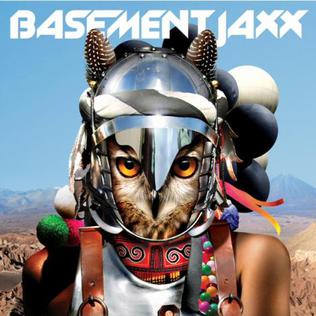
Okay so Basement Jaxx is an electronic music duo, also from the UK. They've been around since freaking 1994 and their most recent album was titled Junto and dropped in 2014. Sometimes their songs will be randomly featured in tv shows and movies. If you like dancing you CANNOT ignore these guys. It's also perfect running music if you're on that treadmill grind.

Favorite Song: "Twerk"

(This song appeared on their 2009 album. Yeah. 2009.)

Electric Guest!
Will somebody please lend her a hand?
These guys are an indie pop group that showed up in Los Angeles in 2011. So yeah, they're pretty brand spanking new-ish. How do I describe their sound? Hmm... It's a perfect mixture of pure chill while also being bouncy enough to dance to. That sounds oxymoronic but that's just how good the music is.

Favorite Song: "Waves"

(It doesn't matter whether you're lounging on the couch or dancing in your undies, you could still be listening to the same song. I think that's pretty dope.)

Jamairoquai!

GROOVY!
Looking for some Jazz and Funk? These British guys pretty much mastered it. They've been providing the ultimate groovy grooves since 1992. Their most recent album is Rock Dust Light Star which was released in 2012. 

Apparently they have some more funk to churn out this spring, so keep an eye out if you want to harness the funk.

Favorite Song: "Time Won't Wait"

(THE FUNK IS TOO STRONG IN THIS SONG.)

Dirty Honkers!
AND THEN THERE'S THESE DORKS.
I don't know where to start with this but I'll try. Dirty Honkers is an Electro-Swing group from Berlin. Elecro-Swing is basically electronic music that is heavily influenced by old fashioned swing music. The strictest form of electro-swing music literally takes old songs from the 20's and um, electrifies them. It's not a remake of the song itself, it's a manipulation of the original.

Anyways, Dirty Honkers is special because they DON'T do this. They make original songs using a lot of saxophone sounds to give their music a "swing" feel to it. 

Their music is changing dramatically from when they released their first album in 2010. In 2010 it is safe to assume that they're strictly elecro-swing. They still sound very swingy nowadays but the electricity has been cranked up a thousand percent.

Old school favorite song: "S.O.S"

Recent favorite song: "We On Fire"

(If you look them up on Youtube, be careful. These guys are weirder than old school Lady Gaga. I'm serious.)